01
Process development
Route screening, condition optimisation, impurity control. We work out yield, waste load and safety margins before deciding whether the route is worth scaling.
Pharma intermediates · API · CDMO
We develop processes for pharmaceutical intermediates and APIs, and we run them: route development, pilot scale-up, technology transfer. The kilogram-scale validation is ours, and so is the commercial order above 100 kg — one line, end to end, no second supplier in the middle.
First conversation is free · NDA in place before structures are exchanged
01 Company
Nanjing Zhonghongda Pharmaceutical Technology Co., Ltd. makes pharmaceutical intermediates and APIs to order. We also develop processes, transfer technology and run capacity expansion for pharma CROs and drug companies in China and overseas.
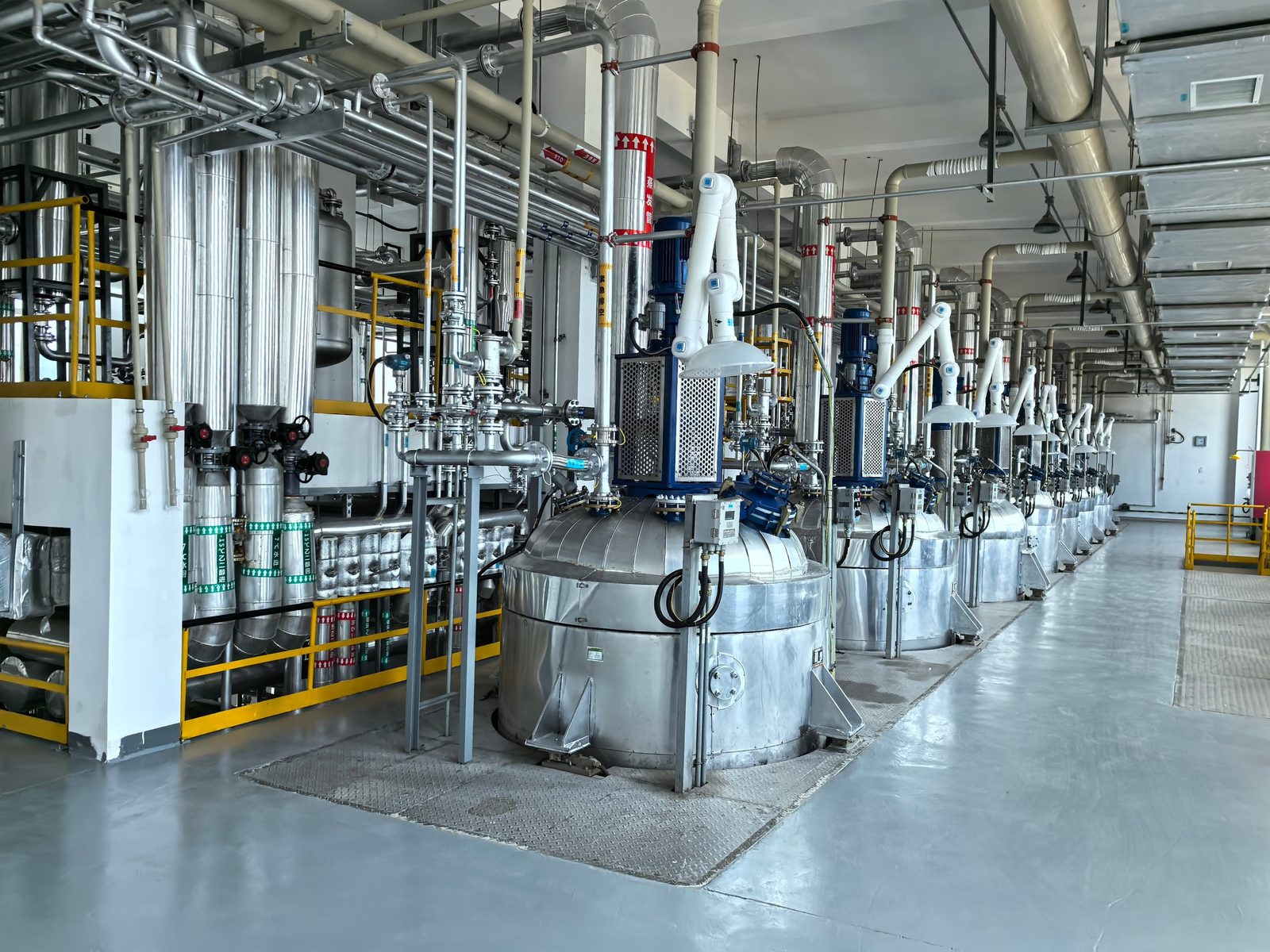
We don't stop at a lab report. The pilot plant, the hydrogenation platform, the production hall and the QC lab are all ours. When a route leaves the bench, someone here picks it up: scale it, validate it, deliver it, run it again.
02 Capabilities
Projects usually stall for one of two reasons: the group that developed the route can't scale it, or the plant that can scale it won't rework the route. We keep those stages under one roof.
01
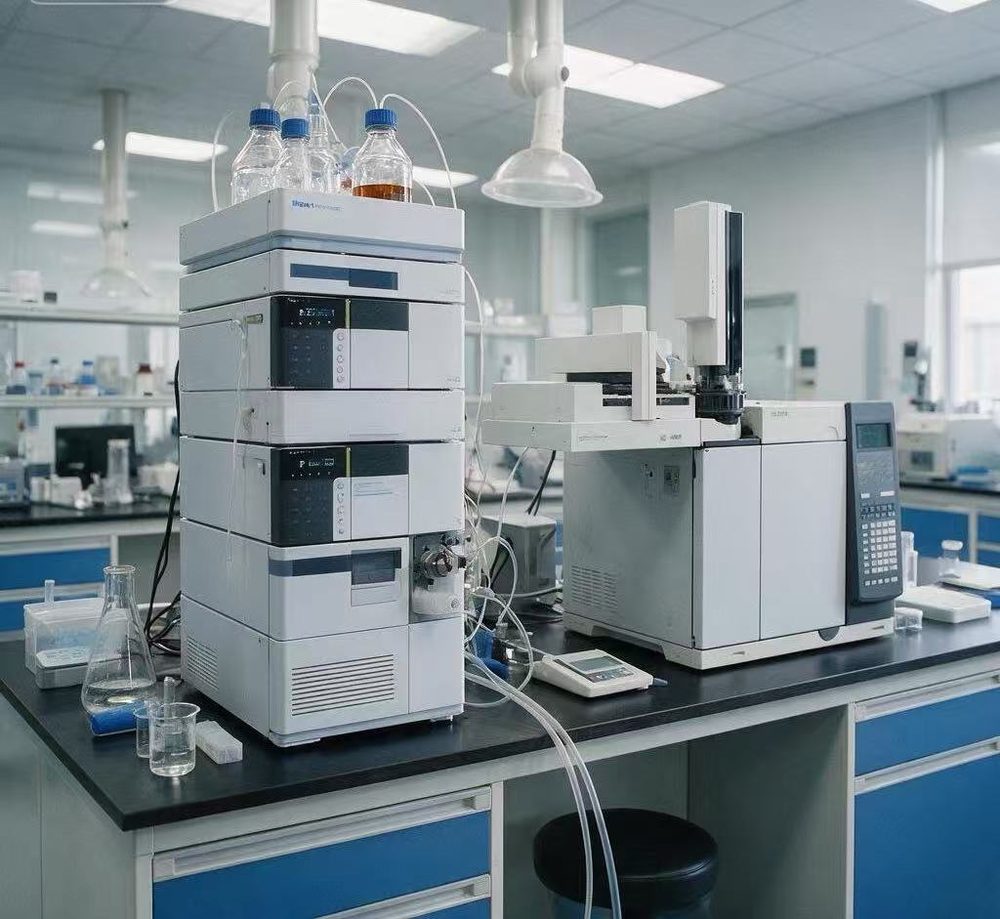
Route screening, condition optimisation, impurity control. We work out yield, waste load and safety margins before deciding whether the route is worth scaling.
02
Fourteen reactors across 200 L, 300 L and 500 L lines, from −70 °C to 200 °C. Built for validating what came off the bench, and for small-lot custom orders.
03
Process description, mass balance, equipment matching, SOPs and batch records. What you get is documentation that reproduces — not just one shipment.
04
Glass-lined 8,000 / 5,000 / 2,000 L and stainless 5,000 / 3,000 / 2,000 L. Orders from 100 kg up to multi-tonne.
05
Thirteen reaction types, seven of them hazardous processes under national supervision — hydrogenation, nitration, chlorination, oxidation, amination, alkylation, diazotisation. Site, equipment and operating experience are all in-house.
06
From grams to hundreds of kilograms, toll or custom. We can run your route, or rework it.
03 Chemistry
Thirteen reaction classes in total, seven of them hazardous processes under national supervision. Hydrogenation and nitration are the ones many CDMOs decline. We have separate dedicated areas, purpose-built equipment, and people who have actually run them.
Chemistry outside this list can still be assessed for feasibility, at no charge.
04 Capacity & equipment
The pilot plant validates. The hydrogenation platform takes the high-pressure work. The production hall delivers. One site, one quality system.
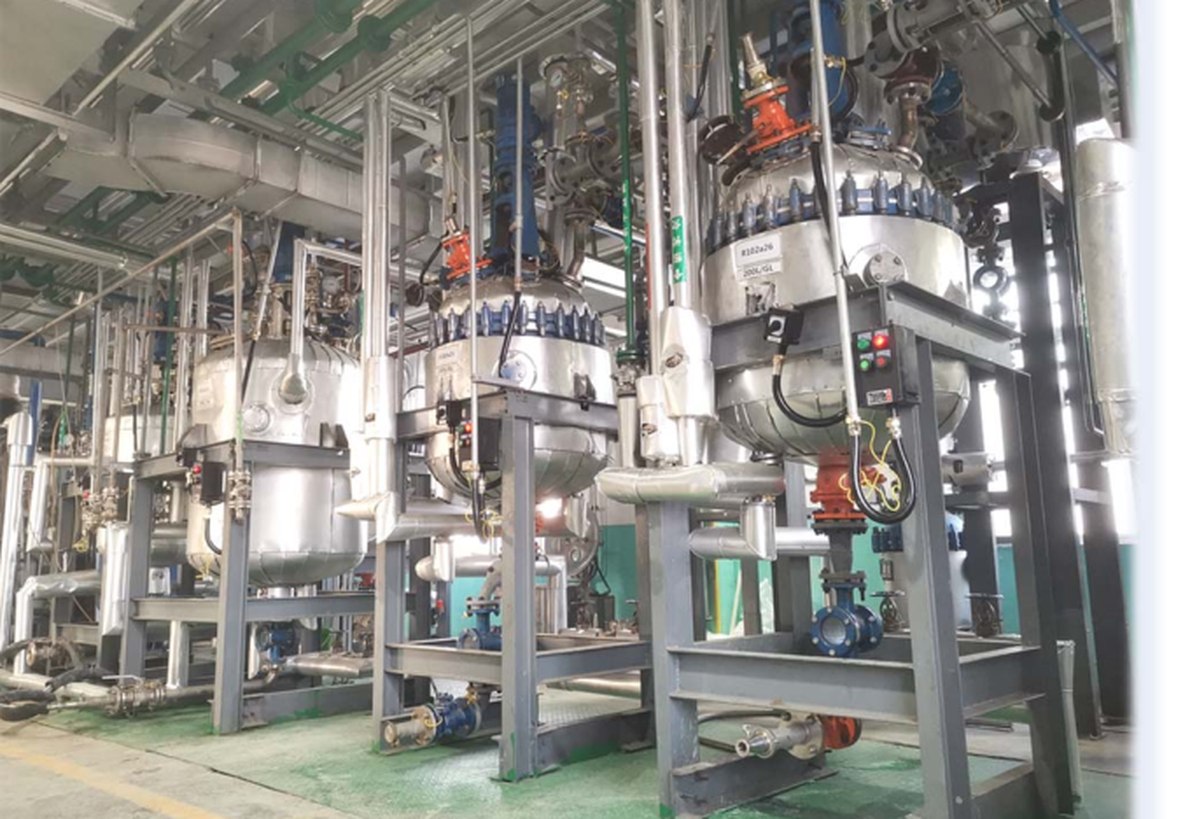
Where a bench result becomes a batch you can repeat.
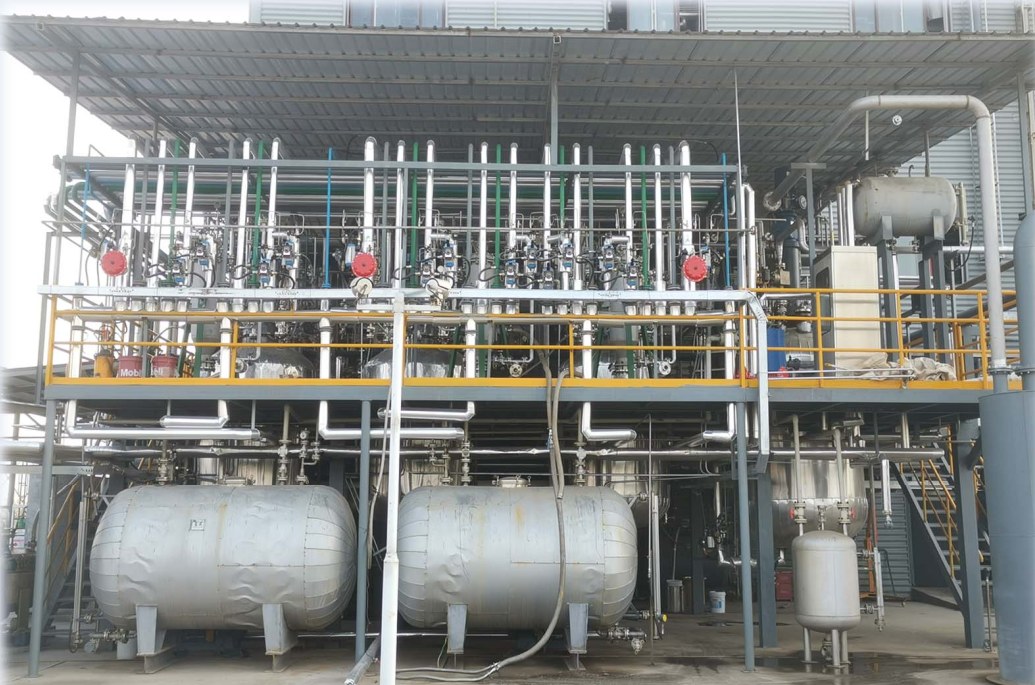
Open external structure, built for high-pressure hydrogen work.
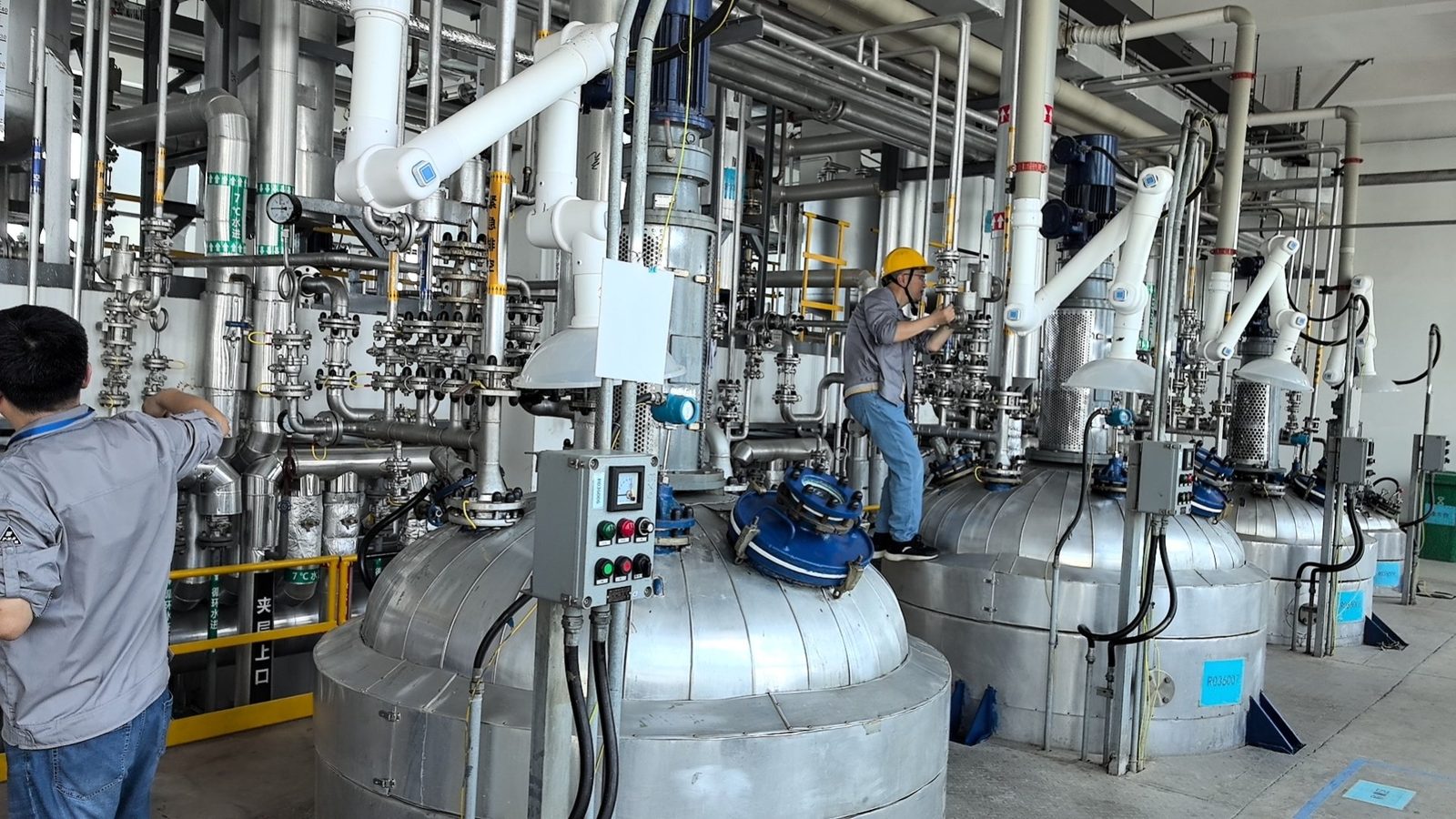
| Reactor | Material | Volume | Note |
|---|---|---|---|
| Reactor 01 | Glass-lined | 8,000 L | Capacity ceiling |
| Reactor 02 | Glass-lined | 5,000 L | — |
| Reactor 03 | Glass-lined | 2,000 L | — |
| Reactor 04 | Stainless steel | 5,000 L | — |
| Reactor 05 | Stainless steel | 3,000 L | — |
| Reactor 06 | Stainless steel | 2,000 L | — |
Drying room with double-cone rotary dryers and a clean packaging room sit downstream of the reactors.
05 Quality & R&D
The QC lab reports independently of production. It covers incoming material, in-process control and release. On the R&D side we run joint laboratories with two universities, so there is somewhere to ask when a route gets stuck.
Joint laboratories with Shandong University and Beijing University of Chemical Technology. We bring their method-development capability into live projects, and we recruit through the same channel.
06 Project records
Customer names omitted. The process steps are as they were. Different materials, different blocking points, different fixes.
Case 01
Aggressive reagent · grams to tonnes
An API intermediate whose route needed a strongly irritant material. On the bench it was done by two or three people in respirators taking turns at the addition — about ten minutes each, then out and swap.
At scale, both the addition time and the exposure risk went up. That was the blocking point when the project came to us. We didn't touch the reaction first. We re-laid the area: how the material is decanted, moved and charged, turning an open procedure into a controlled one.
Addition time came down, and the product went from grams to tonnes.
Scalegrams → tonnes
Changeddecant / transfer / charging / PPE
Case 02
Radical chlorination · bench to pilot
A scale-up project for a p-xylene side-chain chlorination intermediate. Both methyl groups are chlorinated at 120 °C with chlorine gas, one chlorine each. Radical chlorination proceeds stepwise — a little too hot and it overruns, converting one methyl all the way to the di- and tri-chloro by-products. On the bench the tri-chloro fraction stayed low; once the pilot batch was scaled, impurities scaled with it and the product could not meet the client's in-house specification.
The usual approach is to react, discharge, work up, then run a separate distillation column — two separation steps, high energy, high losses. We combined reaction and distillation into a single reactive distillation column, so the product is removed as it forms and over-chlorination is suppressed inside the column.
Temperature and light were fixed as the critical parameters. The dichloro content now releases consistently against the client's specification, batch to batch.
Conditionschlorine gas · 120 °C · photoinitiated
Changedreactive distillation · online column T/P monitoring
Case 03
Carbonyl reduction · impurity 0.1% → below 0.05%
A carbonyl reduction in a tolvaptan intermediate, using KBH4 in methanol. The problem was not yield but impurity: raise the temperature and side reactions follow. The client's in-house limit for this step is 0.1%, and with conventional single-shot charging the pilot batches drifted noticeably — two of them ran close to the line.
We locked the temperature across the whole step to 0–10 °C as a hard process limit, not to be exceeded. KBH4 is charged in portions at set intervals with the charge decreasing batch by batch, the reaction is tracked by HPLC throughout, and work-up was tightened at the same time.
The impurity now sits consistently below 0.05%, roughly half the client's limit.
Impurity0.1% → below 0.05%
Changed0–10 °C hard limit · staged interval charging
Customer names are withheld under confidentiality. Process details have been limited to what can be published.
07 Products
12 commercialised products, single-step yield above 90%, impurity profiles within ICH-Q3A. Main products and intermediates below — quote by CAS number.
84627-04-32030-63-975438-57-275438-54-95391-39-939906-05-240876-98-0108-56-570432-25-643229-01-2136030-00-7394-41-2399-95-11807470-57-0757251-39-16973-09-73934-20-1444731-72-0444731-73-12437-17-4255050-65-856341-37-86304-16-122502-03-02998-56-389797-68-221871-47-61122-28-715088-78-56846-35-1Custom synthesis beyond the catalogue. Send us the structure and we will assess feasibility first.
08 How we work
Every customer is handled by an account manager, a technical lead and a commercial contact, backed by six functions: process R&D, analytical and QC, technology transfer, production, quality/EHS, and chemical engineering.
Technical lead
Route, parameters and scale-up plan are followed by one person from start to finish. No handover, no changed story, no data starting over.
Project manager
Scheduling, sampling, acceptance and shipment all sit on this one line. Customers have one number to call.
Commercial contact
Quotation, contract, NDA, reconciliation — one sentence, clearly, without passing it back and forth.
Three people on the project, six functions behind them — not a line where sales takes the order and technical carries the blame.
Model 01
You have the target molecule. We have the route and the line.
Model 02 · main business
From kilogram validation to 100 kg deliveries.
Model 03
Your process needs to move. We land it.
Substrate, target product, quantity, timeline. NDA first if structures are involved.
Proposed route, risk points, lead time and cost, with the deliverables listed.
Route proven, qualified sample and key data in hand. Scale-up starts only after both sides sign off.
Stepwise scale-up with mass and heat balance at each stage, critical parameters recorded.
Product, process package and batch records delivered, with support for the first commercial campaign.
09 Contact
Tell us the substrate, the target product, the quantity and the timeline. What you get back: whether we can run it, which route, roughly how long, and where the risks sit.